PROTECT VIRGINIA
Stop Ship Pollution

PROTECT VIRGINIA Stop Ship PollutionPROTECT VIRGINIA Stop Ship PollutionPROTECT VIRGINIA Stop Ship Pollution

PROTECT VIRGINIA
Stop Ship Pollution

PROTECT VIRGINIA Stop Ship PollutionPROTECT VIRGINIA Stop Ship PollutionPROTECT VIRGINIA Stop Ship Pollution
  • Home
  • Policy Briefing
  • Accountability
  • Podcasts+
  • FAQ
  • Contact
  • More
    • Home
    • Policy Briefing
    • Accountability
    • Podcasts+
    • FAQ
    • Contact

  • Home
  • Policy Briefing
  • Accountability
  • Podcasts+
  • FAQ
  • Contact

Hold the Shipping Industry Accountable

Polluter Pays Principle

The shipping industry makes $40B to $50B  in annual profit yet fund lobbyist to stifle regulation rather than implement clean solutions. It is both fair and just for the maritime shipping industry to pay the cost of clean fuel when operating in Virginia waters. This argument is rooted in the "Polluter Pays Principle,"a cornerstone of modern environmental law which asserts that those who produce pollution should bear the costs of managing it to prevent damage to human health or the environment. If international corporations do not act responsibly in Virginia, it is our Commonwealth and its citizens that pay the price of a increased health costs and a shrinking market leading to loss of job and livelihood. 


The case for holding the shipping industry accountable rests on  the following three primary pillars.
Pillars of Justice & Accountability

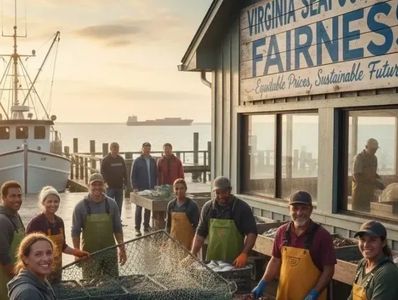
Protecting Virginia's Vital Industries

Economic Fairness, Shifting the Burden from Virginians

Safeguarding Public Health and Social Justice

Virginia's economy is deeply tied to the water, and shipping pollution directly threatens other stakeholders who also rely on these resources:


  • The Seafood Industry:  The Chesapeake Bay supports the largest clam fishery on the East Coast. Ocean acidification from scrubber wastewater (used to "clean" dirty fuel exhaust) directly harms the ability of oysters and crabs to reproduce. Some compounds released in scrubber wastewater are directly toxic to marine life, while others bioaccumulate in oysters, crabs, fish, and ultimately consumers of Virginia’s seafood.  


  • Tourism and Recreation:   Coastal communities depend on clean air and water to attract visitors. A single cruise ship can emit as much 24M gallons/week of toxic scrubber wastewater and can produce emissions equivalent to hundreds of thousands of cars, depending on the emission type (SOx, NOx, PM, CO2), thus degrading the very natural beauty that drives Virginia's $24 billion      tourism sector.

Safeguarding Public Health and Social Justice

Economic Fairness, Shifting the Burden from Virginians

Safeguarding Public Health and Social Justice

 The health impact of shipping emissions is not distributed equally; it often falls most heavily on residents of Virginia's port cities.


  • Direct Harm:  Particulate matter from ship exhaust is linked to asthma, Alsheimer’s disease, emphysema, cancer, and low birth weight in newborns. Exposure to      Sulfur Oxides and Nitrous Oxides is also linked to respiratory diseases.      Toxins bioaccumulate in seafood, and if regularly ingested, cause serious health issues.


  • Ethical Responsibility:  It is fundamentally unjust for a multibillion-dollar industry to derive profit from activities that increase premature deaths and hospital admissions in local port communities, while refusing to pay the marginal difference for cleaner fuel. These communities often have low-income populations, making accountability a social justice issue.  


Economic Fairness, Shifting the Burden from Virginians

Economic Fairness, Shifting the Burden from Virginians

Economic Fairness, Shifting the Burden from Virginians

  Unfortunately, much of the shipping industry "externalizes" the true cost of its operations by using low-grade Heavy Fuel Oil  which has highly toxic byproducts impacting  the health of marine life and the residents of port communities. 


  • Subsidy of Pollution: When ships burn dirty fuel, the resulting costs—healthcare for respiratory issues, restoration of acidified waters, and loss of biodiversity—are paid for by Virginia taxpayers and local industries rather than the shipping companies. Allowing the industry to externalize costs amounts to Virginians subsidizing air and water pollution. 


  • Incentivizing Innovation: Requiring shipping companies to pay for clean fuel creates a financial incentive to invest in pollution free and green technologies like hydrogen or electric propulsion, rather than relying on outdated, high-emission engines.

Copyright © 2026 Protect Virginia  Inc. All Rights Reserved.

This website uses cookies.

We use cookies to analyze website traffic and optimize your website experience. By accepting our use of cookies, your data will be aggregated with all other user data.

Accept